How to Save on Hotel Construction Key Focus Areas That Drive Profitability
5 March 2026The biggest financial risk in hotel development often appears at the very beginning — during planning.
If the hotel’s core design (Planning Core) is not properly structured, any later “savings” are only temporary and can become far more expensive down the line.
The Core That Shapes the Next 15 Years
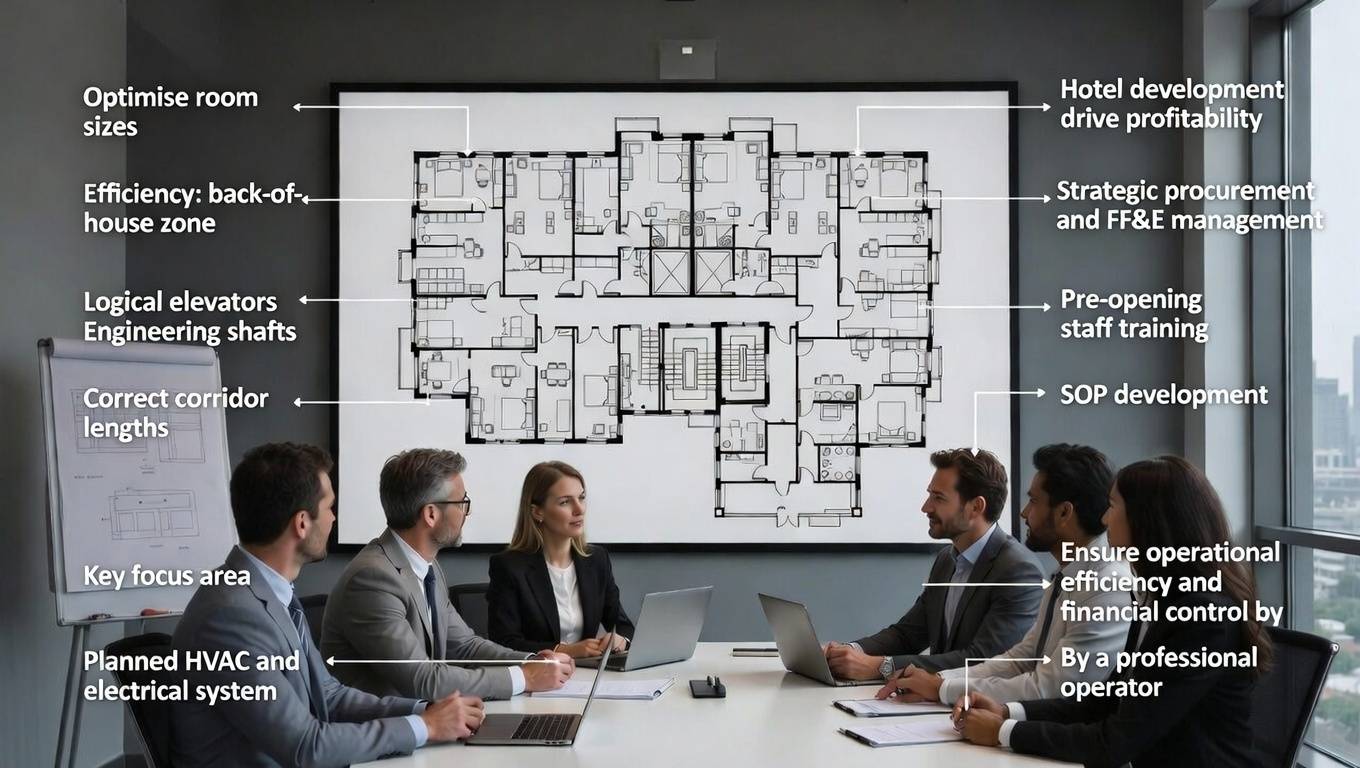
A well-planned core includes:
-
Optimal room layout
-
Efficient Back-of-House zones
-
Logical placement of elevators and engineering shafts
-
Correct corridor lengths
Poor layout automatically increases labor costs, energy consumption, and operational time — creating ongoing, long-term expenses.
Project Size and Room Mix
Oversized projects often lead to oversupply and discounted rates.
A smaller, properly structured hotel can often deliver a higher ROI.
Room type is equally critical.
If the market demands Family Rooms, Suites, or Extended Stay formats, but the project only offers Standard rooms, RevPAR is directly reduced and pricing pressure increases.
Engineering Systems — Where Real Savings Are Made or Lost
HVAC, insulation, water, and electrical systems determine the hotel’s OPEX.
Low-quality or poorly calculated systems result in:
-
High energy costs
-
Frequent technical issues
-
Guest dissatisfaction
Energy efficiency during construction is far cheaper than corrective fixes during operations.
Procurement and FF&E — Strategy Over Spontaneity
Savings do not mean buying cheap furniture.
A strategic approach includes Lifecycle Cost analysis, competitive vendor selection, and standardization.
Low-quality inventory often requires replacement within 2–3 years, which effectively doubles the CAPEX.
Pre-Opening — The Often Overlooked Critical Phase
The pre-opening period covers:
-
Staff hiring
-
Training programs
-
SOP development
-
Implementation of operational systems
Without professional management at this stage, the hotel enters the market unprepared, damaging first-year performance — and the first year defines market positioning.
Why a Strong Operator Is Essential
Properly managing this process requires an experienced hotel management company that:
-
Assesses operational efficiency at the design stage
-
Prepares the full financial model (CAPEX / OPEX forecast)
-
Ensures engineering and functional compliance
-
Manages the procurement process
-
Plans and executes the pre-opening strategy
A professional operator is not only crucial for future operations —
they serve as a financial control mechanism from the construction stage onward. Poor structure creates excessive costs that are difficult and expensive to correct later.
Real Savings
True savings do not mean spending less at any cost.
They mean investing wisely where it maximizes ROI, reduces risk, and accelerates payback.
The most profitable hotels are not necessarily the cheapest to build —
they are the ones planned strategically and managed professionally from day one.
Conclusion
Hotel construction is capital architecture.
Savings come from well-planned investment that minimizes risk and accelerates ROI.
The most successful projects are never left to chance.
Professional management involvement from the very beginning ensures that every decision contributes to long-term profitability and operational efficiency.
If you want your project to avoid unnecessary costs and operate at maximum efficiency, strategic operator involvement must start before decisions become irreversible.